Short on room and tired of clutter? The best small space living ideas are simple: divide areas with furniture, bounce light with mirrors, and store things up, behind and under what you already own.
These tips fit into the wider goal of learning how to make your home cozy, even when floor space is tight.
| Idea | What to do |
|---|---|
| Bed and living area divider | Place the sofa at the foot of the bed |
| Mirror placement | Hang a large mirror opposite the window |
| Ceiling paint | A shade lighter than the walls |
| Curtain height | Hung close to the ceiling |
| Coffee table swap | Cushioned storage ottoman or bench |
These tips come from a Greystar studio-apartment blog post published December 4, 2024, available at Greystar’s studio space-saving guide. Advice and products change, so check the source before you rely on it.
Divide a small space into zones
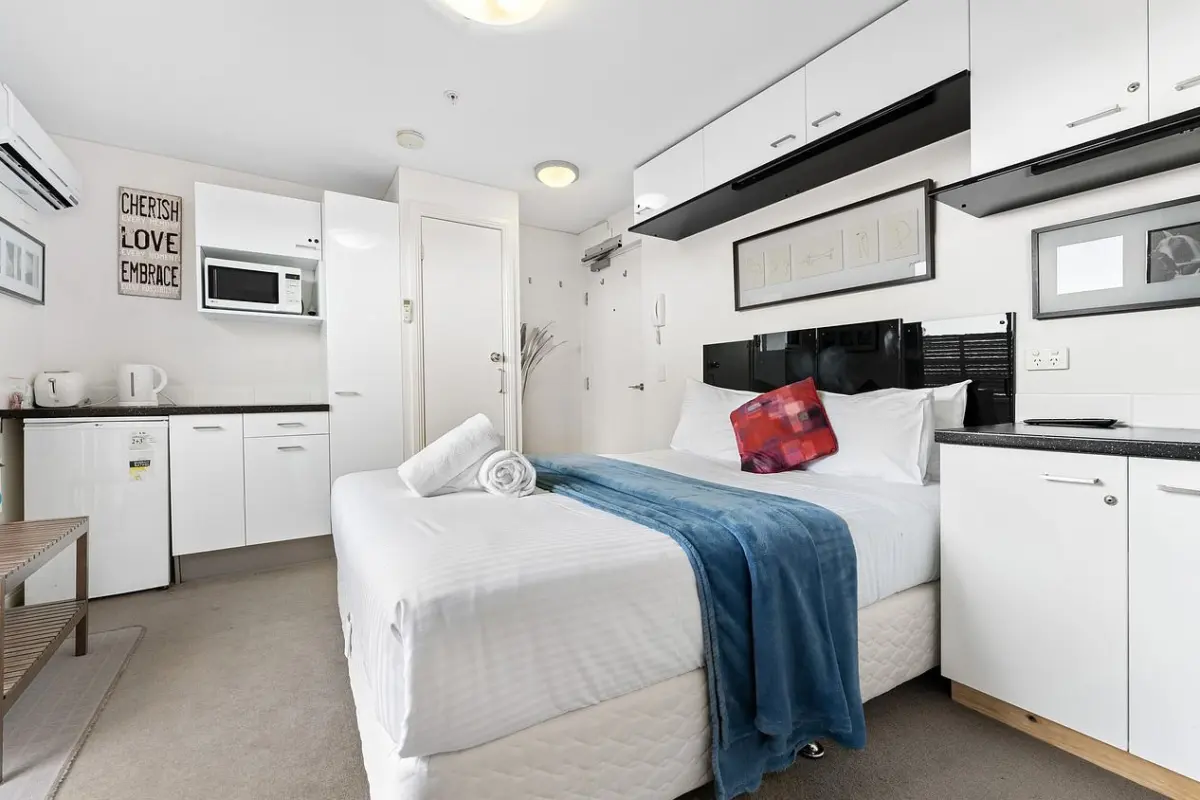
In any home, it helps to have distinct areas for sleeping, living, eating, and working. In a studio the overlap can feel unavoidable, so the aim is to draw clear boundaries that create the feeling of separate rooms.
Traditional room dividers often waste valuable space. Furniture you already need can do the job instead:
- Place your sofa at the foot of your bed to divide the sleeping and living areas.
- Put a media console with a TV on a rotating mount at the foot of the bed, with the couch against the opposite wall.
- Use a large, open-back bookshelf to define each space while the room stays open.
The bookshelf option has a bonus: it doubles as storage, so the divider earns its footprint. Choose whichever layout suits your floor plan and test it before you commit to moving anything heavy.
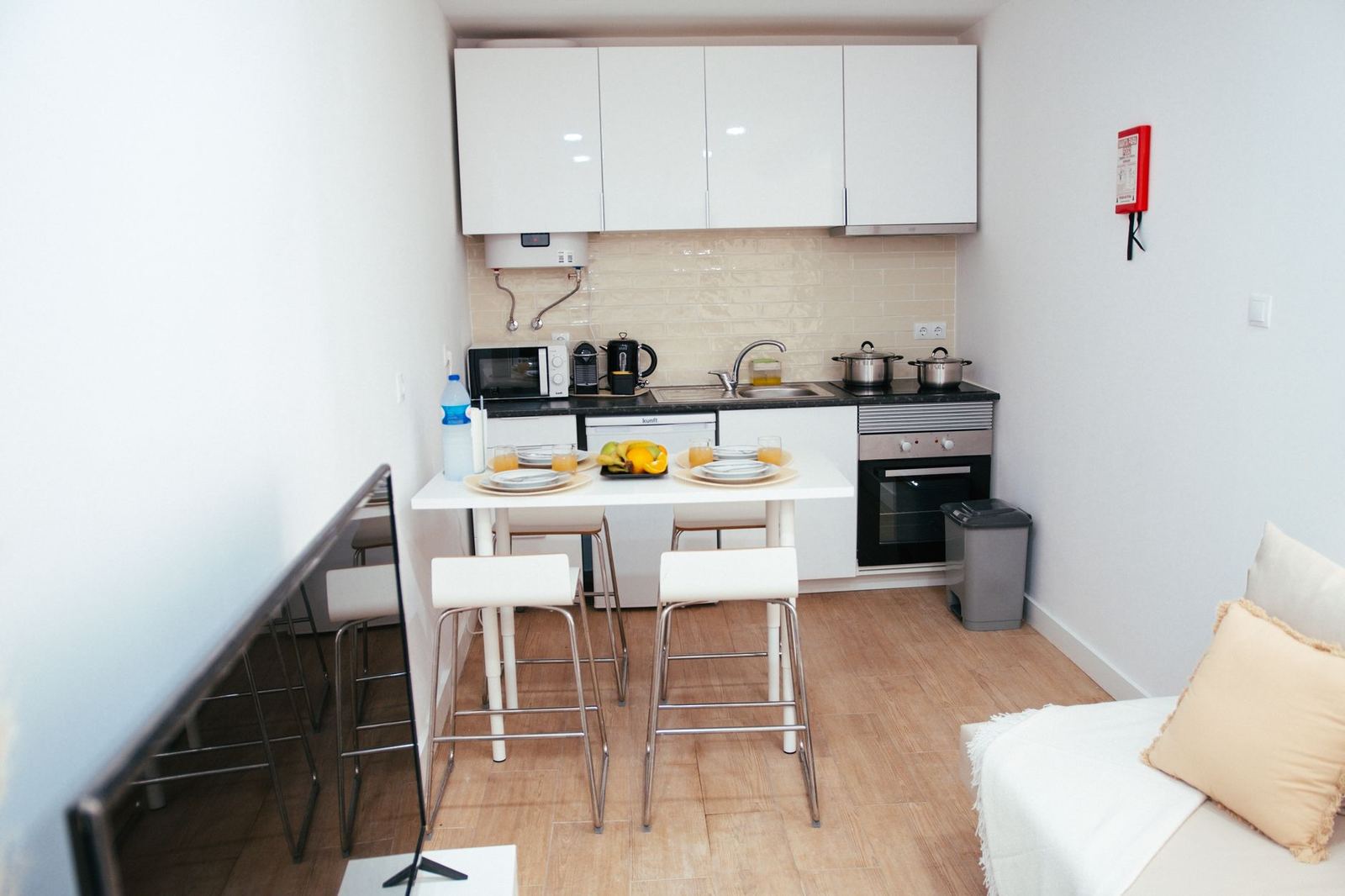
Make the room feel bigger
A mirror will not add square footage, but placement and size matter. Position a large mirror opposite your window to create a natural light corridor.
You can go further by angling a floor-to-ceiling mirror next to your brightest window. That can effectively double the natural light and create the illusion of an additional window, which works well in narrow spaces and dark corners.
Art can add perceived depth and height too. Look for pieces with these traits:
- Strong perspective lines that draw the eye inward
- Landscape scenes that create a window effect
- Vertical compositions that enhance ceiling height
- Light, airy colors that make walls appear to recede
Color and texture choices help as well. Try these illusion-creating techniques:
- Paint your ceiling a shade lighter than your walls to create height.
- Use continuous flooring throughout to create flow.
- Hang curtains close to the ceiling and extend them beyond the window frames.
- Add uplighting in corners to eliminate shadows and expand the space.
The goal is not to deceive anyone. It is to enhance the natural attributes of your home.
Where can you find hidden storage?
Small homes are full of hidden storage possibilities if you know where to look. The backs of doors and the insides of cabinets are the easiest places to start.
- Install a utility rack on the back of your bathroom door for toiletries, styling tools, and damp towels.
- Attach mesh spice racks to the inside of kitchen cabinet doors for extra shelf space.
- Use corners, which are often neglected, with triangular bookshelves or wedge-shaped desks.
Corner-friendly furniture lets you use every inch without crowding the middle of the room.
Choose furniture that does double duty
When floor space is limited, less is more. Pick pieces that combine style with function, so each one earns its place.
A platform bed with bookshelves or built-in drawers underneath gives you storage without another cabinet. For the living area, replace a traditional coffee table with a cushioned storage ottoman or bench.
Those pieces offer comfortable seating, a place to prop your feet, and hidden room for blankets, books, or other items. That keeps clutter out of sight without a separate storage unit.
Show your things instead of hiding them
Minimalism can work well in a small home, but it is not mandatory. You can take advantage of vertical space and display your possessions for a personal look.
Clothing racks, open-back bookshelves, and floating shelves can all showcase your wardrobe and accessories. For an industrial touch, hang a steel clothing rack from the ceiling.
An open closet only looks good when it stays neat, so edit what you display. Keep the pieces you love in view and store the rest in the drawers or ottomans described above.
Keep it cozy and tidy day to day
A small home reflects mess quickly, so a steady habit matters. It helps to learn how to create a cleaning routine that keeps surfaces clear.
Seasonal changes are easy to handle when you keep things light. When the weather turns, you can refresh a compact space with spring decor ideas that swap in small accents rather than adding more furniture.
Frequently asked questions
Do mirrors really make a small space feel bigger?
Show answer
They will not add square footage, but a large mirror placed opposite a window can create a natural light corridor. Angling a floor-to-ceiling mirror next to your brightest window can effectively double the natural light, according to the Greystar post.
How do I separate the bed from the living area in a studio?
Show answer
Place your sofa at the foot of your bed, or put a media console on a rotating mount at the foot of the bed with the couch on the opposite wall. A large open-back bookshelf is another option that keeps the room open.
Which furniture is worth buying for a small home?
Show answer
Look for pieces that double as storage. Examples include a platform bed with drawers or bookshelves underneath, and cushioned ottomans or benches in place of a coffee table.
How can I make a room look taller?
Show answer
Paint the ceiling a shade lighter than the walls and hang curtains close to the ceiling. Art with vertical compositions can also enhance the sense of ceiling height.