Clutter piling up faster than you can tidy it? These home organization ideas work because they start small: sort everything into four boxes, give each item a home, and tidy a little every day.
Organizing is one step in learning how to make your home cozy, so treat this page as a practical starting point.
| Item | Value |
|---|---|
| Sorting boxes in the K-State method | 4 boxes: Keep, Store, Give Away/Sell, Throw Away |
| Hanging space most clothing needs | 2 to 3 inches per garment |
| Time before household jobs become routine | At least 2 to 4 weeks |
| Containers in the UF/IFAS room-by-room sort | 5 large containers |
These figures come from K-State Research and Extension’s clutter fact sheet and a UF/IFAS Extension blog post. They can change, so check the source before you rely on them.
Where does everyday clutter come from?
Clutter rarely shows up all at once. K-State Extension lists the usual culprits, and most homes will recognise several of them:
- Mail, junk mail, bills and unfiled papers
- Books, catalogs and magazines
- Toys and games
- Hobby materials, tools and hardware
- Outerwear such as hats, boots, shoes, bags and backpacks
- Laundry and cleaning supplies
- Out-of-date prescriptions and cosmetics
The same fact sheet says that a lack of organization causes stress for everyone in the household. That is a good reason to treat tidying as a household project rather than one person’s chore.
Before you buy a single bin, decide what you want from the effort. UF/IFAS Extension suggests your goal can be as simple as not hunting for your keys before work, and that without a real need you probably won’t finish the job or keep the system going.
Not everything has to be beautiful, either. A University of Georgia Extension clutter program takes a practical view, with one agent saying, “My dishes don’t spark joy, but I need them to eat.” Keep what you use, and give it a place.
When the pile is large, start with a guide on how to declutter your home, then come back here to set up storage.
Sort everything with the box method
K-State Extension describes a box approach that it says professional organizers use. You sort items into four boxes labeled Keep, Store, Give Away/Sell and Throw Away, per the K-State fact sheet.
- Keep: return these items to their proper places and sort like items together.
- Store: pack items you will need later, and label each bin or tote with the owner’s name and whether the contents are seasonal.
- Give Away/Sell: only items in good condition belong here.
- Throw Away: broken, ripped, worn or stained things go here, or straight into a trash bag.
Work in a loop. In each room, start at one spot and work clockwise until you return to where you began, as the K-State sheet advises.
Other extension offices tweak the setup. Arkansas Extension suggests four containers plus a laundry basket for items that belong in another room. Florida’s UF/IFAS adds a separate container for recycling and one for a future yard sale, with five large containers in all.
Set a time limit before you begin, and stay in the area while it runs. Arkansas Extension says to set a timer and not leave the area to put something away, because you may never get back.
When you can’t decide about an item, UF/IFAS Extension offers these questions:
- How long has it been since I last used this?
- Do I like this?
- Is it broken?
- Do I have several of these, and how many do I need?
- If I keep this, what can I get rid of to make room for it?
For donations, call first. K-State Extension says to call before you drop things off so you are not leaving your clutter for someone else to deal with.
Give every item a home
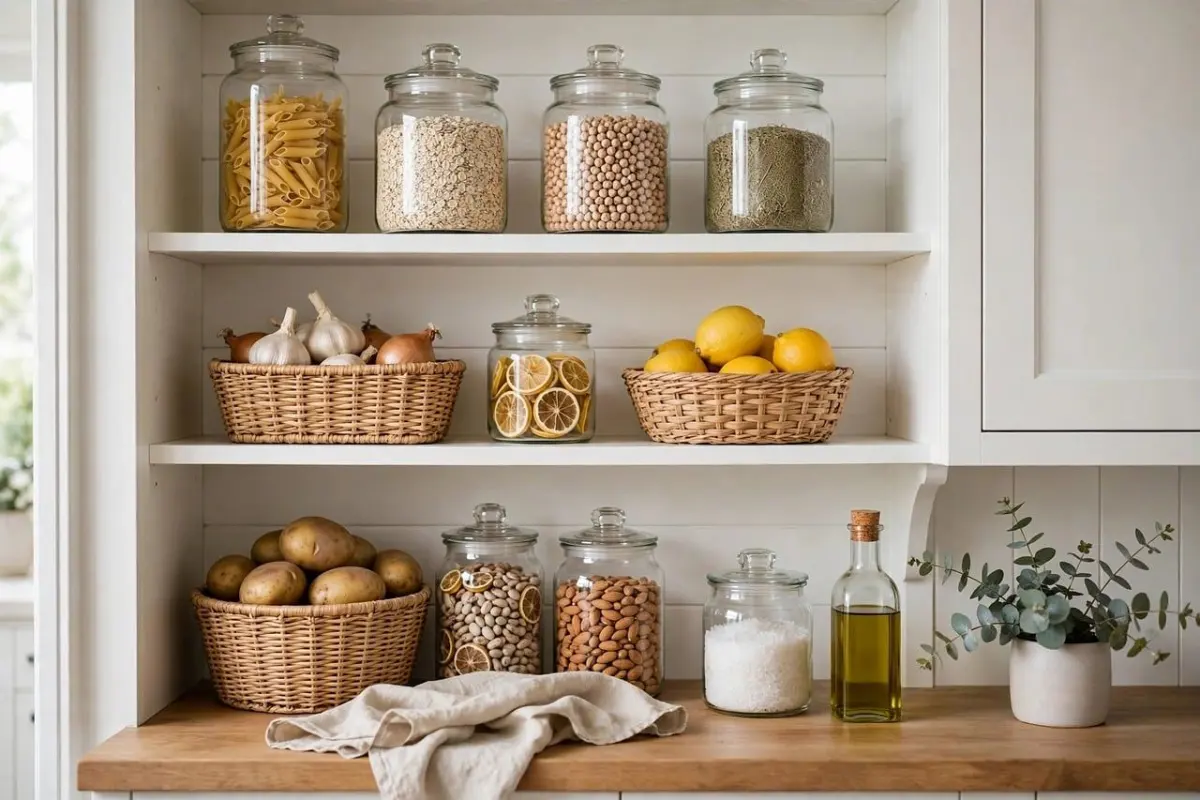
An organized home depends on storage that fits what you own. UF/IFAS Extension puts it bluntly: you can’t put things away until they have a home, and without one you are just creating more clutter.
To find the gaps, list each room, the activities that happen there, the supplies they need and the storage required. A living room might need a TV cabinet, plus somewhere for game controllers, so the controllers stop landing on the sofa.

Next, group things into zones. University of Kentucky Extension says gathering like items where they will be used helps save time when you need something like a rubber band or your keys. K-State suggests “centers” for tasks such as cleaning, desk work, cooking, baking, makeup, tools, studying, and hobbies and games.
Containers help here too. Kentucky Extension notes that bins, folders and vacuum bags define a home for each item and set limits on how much you keep. Labels let everyone in the house know where things go, so reorganizing does not become a weekly job.
Measure first. K-State advises you to measure your space and the items you want to store before purchasing an organization system.
Closet organization ideas
Closets collect clutter quietly. K-State Extension offers a simple test: turn every hanger around so the hooks face you, flip each one back as you wear the item, and after several months you can see which clothes are actually in use.
Then try these ideas from the same K-State fact sheet:
- Organize with hooks, hangers, shelves or baskets, and get items off the floor.
- Fold drawer items so they store vertically and every item is visible when the drawer opens.
- Store scarves and handbags on shower curtain rings.
- Leave room for air: most clothing needs 2 to 3 inches of hanging space.
That last point matters beyond looks. The fact sheet says tightly packed clothing can be a buffet line to clothes moths and other fiber-eating insects, and that vacuum-sealable storage bags can reduce bulk for off-season items.
Habits that keep a home organized
Systems fail without upkeep. Try the one touch rule from K-State Extension: touch items only one time, so mail is sorted into bills, things to file and things to throw away the moment it comes in, as the K-State fact sheet describes.
Keep daily effort tiny. Kentucky Extension recommends a few minutes each day putting things away and a cleaning schedule that assigns certain days certain tasks. Less stuff also means less to move, dust or clean.
Share the load. K-State says it is unfair to expect one person to restore order to the entire house, and that it will take at least 2 to 4 weeks until the jobs become routine, so be patient.
Finally, slow the clutter at the door. Kentucky Extension points out that many common items can be rented for less than the purchase price of a new one. Seasonal pieces deserve the same question: before you add more of your fall decor ideas, decide where each piece will live.
Frequently asked questions
Where should I start if I feel overwhelmed?
Show answer
Plan a session on your calendar, pick one small area and set a timer. Arkansas Extension says you may not finish in one go, but you will have started and can schedule the next round.
How long does it take to build organizing habits?
Show answer
K-State Extension says it will take at least 2 to 4 weeks until household jobs become routine. Share expectations with everyone in the home and teach simple ways to do each task.
What should I do with items I no longer need?
Show answer
Donate things in good condition, sell items that are in good to new condition, and recycle or throw away what is broken. Call a charity before you drop items off so you do not leave clutter for someone else.
Do I need to buy storage first?
Show answer
No. Sort first, then measure your space and see what you actually need to store. Kentucky Extension also suggests checking whether you already own something that can serve the same purpose.