You have a full bookshelf and a nagging feeling it looks messy. Here is how to style a bookshelf: edit what stays, mix book orientations, add a few objects, and leave gaps so every piece gets breathing room.
For more room-by-room inspiration, browse these home decor ideas.
| Styling item | Rule of thumb |
|---|---|
| Books lined up in the middle of a shelf | 10 to 12 books |
| Horizontal book stack | 3-5 books |
| Vertical book stack | 5-9 books |
| Object groupings | threes or fives |
| Materials to mix | two or three |
| Shelf edit | every few months |
These figures come from designer and stylist advice published by Livingetc and Style Curator. They are guidelines rather than fixed rules and can change, so check the sources before you rely on them.
Edit first: keep only what you want to look at
Before you move a single book, decide what earns a place. Interior designer Aimee Wertepny advises in Livingetc to choose accessories that you want to look at every day, so your shelves never become a graveyard for unwanted objects.
Clutter is personal, too. Stylist Frances Bailey says she does a shelf edit every few months and passes books on to friends, according to the same Livingetc piece.
Then step back. Bailey also suggests looking at the shelves from further away, because something that looks good up close can read differently from across the room.
How to arrange the books themselves
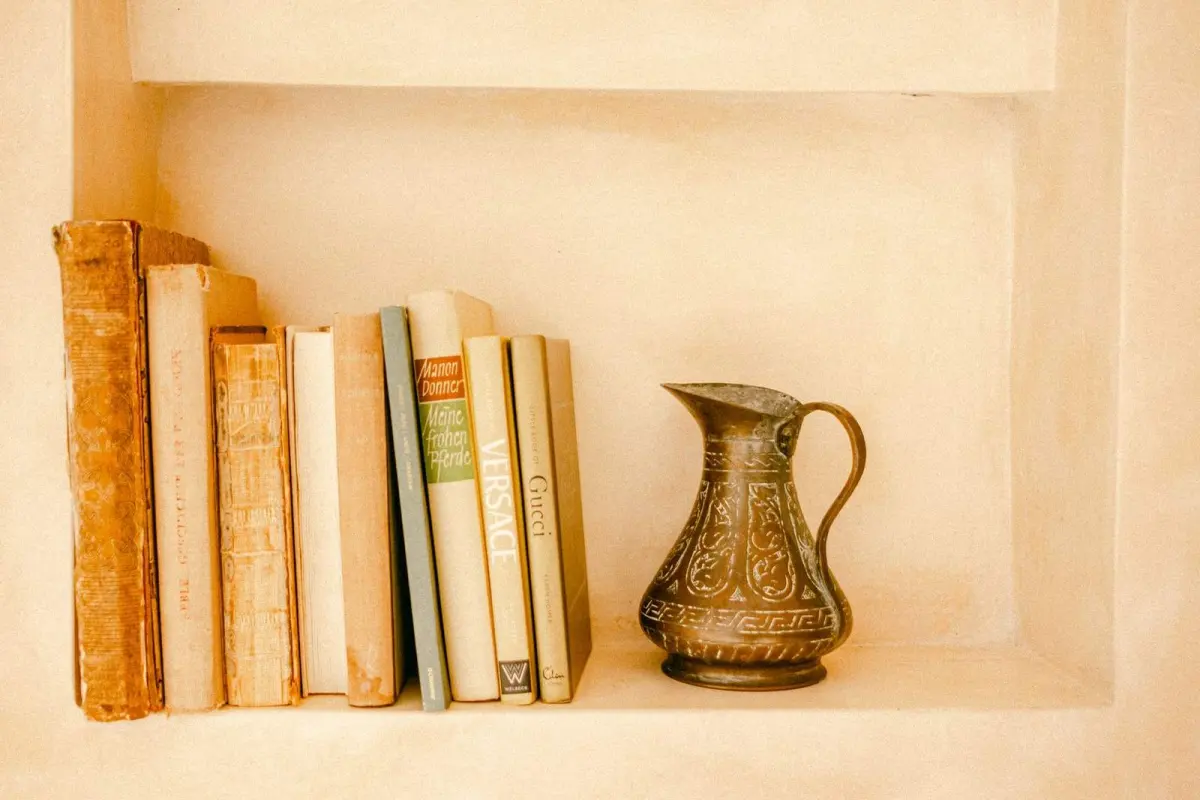
The trick is to mix up orientation so the shelf has rhythm. Style Curator suggests this pattern:
- Build a horizontal stack of 3-5 books.
- Offset it with a vertical stack of 5-9 books.
- Scatter these groups across the shelf, and sort by colour or size only if you want extra structure.
If you prefer a calmer look, Livingetc quotes Bailey on lining up 10 to 12 books in the middle of a shelf with space on either end.
Books can also do double duty. Designer Kit Kemp told Homes & Gardens that books laid flat make elegant pedestals for art and objects, and she reserves this for books already read.
Designer Kelsey Sundberg skips traditional bookends. She leans books against a stack and adds one vintage brass bookend on the other side, as described by The Zoe Report.
Layer objects, art and plants between the books
Style your shelf the way you would dress. Style Curator says to begin with your largest pieces, such as book stacks and baskets, then layer in mid-sized ceramics, frames and sculptures.
Group objects in threes or fives, which the same source says creates visual balance and feels more relaxed. If an arrangement is not working, change the height or scale of a piece.
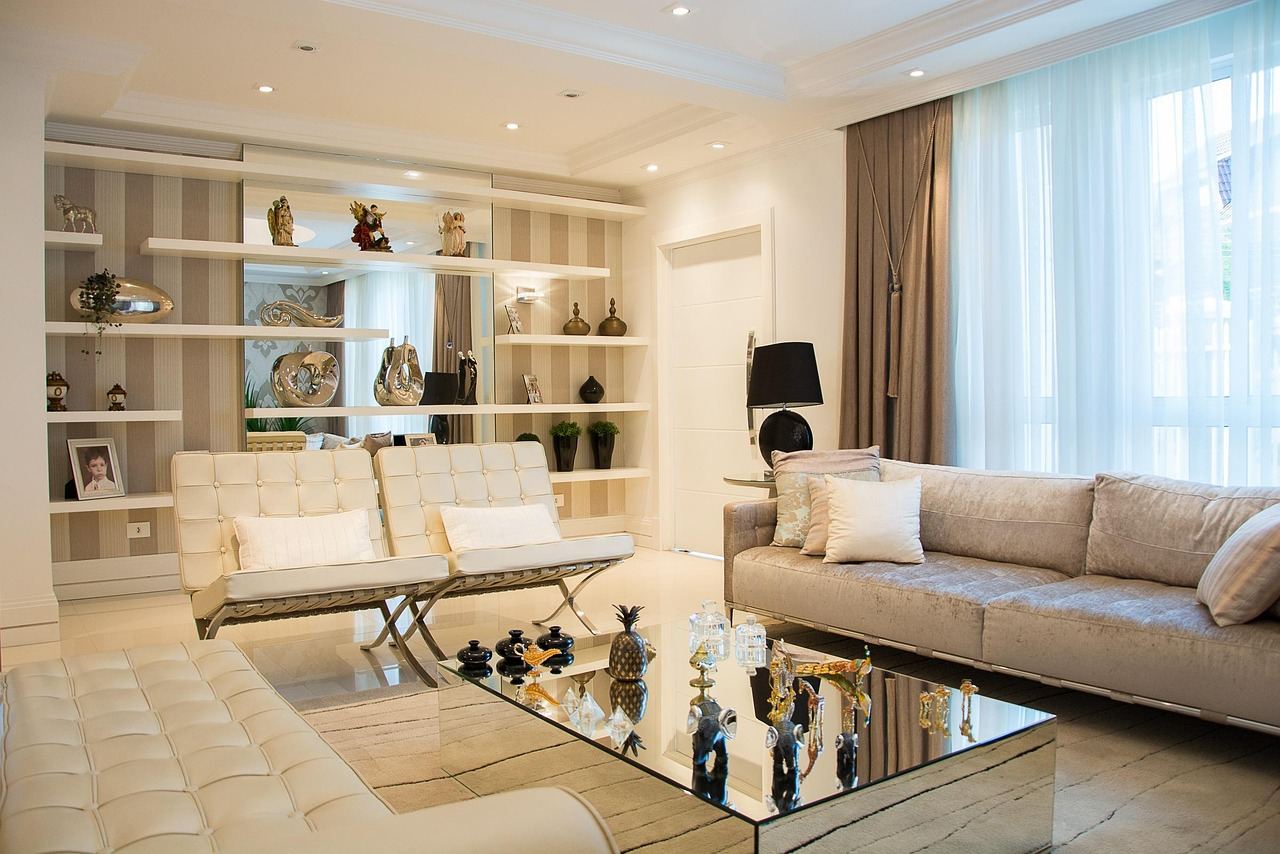
Mix materials without overdoing it
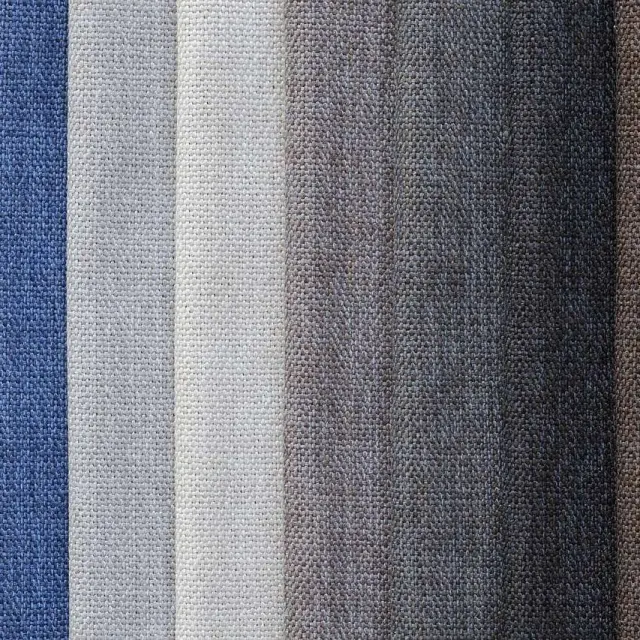
A shelf of one material feels flat. Drew and Jonathan recommend picking two or three materials you love, such as a slender white ceramic vase beside a dark wicker bowl.
If your taste leans collected and layered, these boho decor ideas show how texture can carry a room.
Bring in art and greenery
Art makes a natural focal point. Kit Kemp says a thick frame helps define a piece and separates it from the busyness of the shelves, as reported by Homes & Gardens.
You can also shop your house. Bailey suggests resting a small piece of art on a stack of books, and says a command strip can hang one on a metal bookcase, per Livingetc.
A trailing plant such as Pothos adds life and softens the look, according to Style Curator. Artificial plants give the same visual effect if you do not have a green thumb.
Why does empty space make a shelf look curated?
Sometimes the best move is to add nothing. Style Curator says gaps let the eye rest and are what take a shelf from cluttered to curated, so build in some negative space.
Sundberg agrees that the parts left un-styled matter as much as the styled ones, per The Zoe Report. She also keeps the palette consistent: after styling, blur your eyes, and if one object or colour really pops, take it out.
Large shelving can feel overwhelming. Drew and Jonathan advise working slowly in sections, then assessing the whole unit and tweaking from there.
Add depth with light, mirrors and seasonal swaps
Kit Kemp describes placing antique mirrors behind shelving to create the illusion of more depth and space. She also suggests LED strip lights above or below the shelf so it comes alive in the evening, according to Homes & Gardens.
Styling does not have to be permanent. Bailey shows natural items such as shells in summer and more art and objects in fall and winter, as she told Livingetc.
The same rules work on a slim hallway shelf. These entryway decor ideas are a good place to start if your bookcase sits near the front door.
A simple order to follow
When you are ready to restyle, work in this sequence:
- Clear the shelves and keep only what you love.
- Place your largest items first: book stacks and baskets.
- Mix horizontal and vertical book groups for rhythm.
- Layer in mid-sized objects, art and a plant.
- Leave deliberate gaps, then step back and blur your eyes.
- Remove anything that jumps out of the palette.
Frequently asked questions
How many books should I put on one shelf?
Show answer
Leave space rather than filling every inch. One designer-backed approach from Livingetc is to line up 10 to 12 books in the middle of a shelf and leave room on either end.
Should I sort books by colour?
Show answer
It is optional. Style Curator says sorting by colour or size can add structure, as long as the shelf still feels natural.
Can I style a bookshelf if I do not own many books?
Show answer
Yes. Drew and Jonathan say your shelving can look fabulous whether you are bookish or not, using vases, frames and other decorative items instead.
How often should I restyle my shelves?
Show answer
Bailey edits her shelves every few months and shifts the look with the seasons, per Livingetc. Do it whenever the shelf starts to feel cluttered to you.