Worried your room will look messy rather than layered? These boho decor ideas start with warm neutrals, then add texture through rattan, jute and wood. Save the bold patterns for last.
For wider room-by-room inspiration, browse more home decor ideas across the site.
| Item | Value |
|---|---|
| Starting palette | Warm neutrals |
| Colors that tie patterns together | One or two main colors |
| When to buy pillows, blankets and rugs | Last |
| Proportion guide | 70/30 rule |
| Natural materials to look for | Wicker, rattan, wood and hemp |
These points come from design advice published by Real Homes and My Bespoke Room. Styling advice can change, so check the sources before you rely on it.
Build the base with warm neutrals
Boho is often pictured as a riot of color, yet one designer quoted by Real Homes says to start with a palette of warm neutrals. The big, fixed pieces come first, and the loud colors follow later.
The same designer says it is much easier to create a consistent vision when the warm neutrals run through the sofa, wall color, round coffee table and flooring. That gives you a calm backdrop that patterns can sit on.
A Hunker roundup suggests the same approach, starting with creams and whites and pairing them with chestnut leather, green from plants, or terra cotta from flooring or pottery.
If bright color makes you nervous, a fully neutral room still works. Real Homes says you can get a bohemian look entirely in neutrals by layering plenty of different neutral shades and adding lots of texture with throws and cushions.
- Choose warm off-white, sand, cream or brown for sofas, walls and floors.
- Add green through plants rather than paint.
- Bring in terracotta through pots and pottery.
Natural materials that carry the texture
Texture is what stops a neutral room from feeling flat. The style has roots in free-spirited living of the 1960s and 70s, when Spacejoy says interiors were all about mixing cultures, patterns and textures.
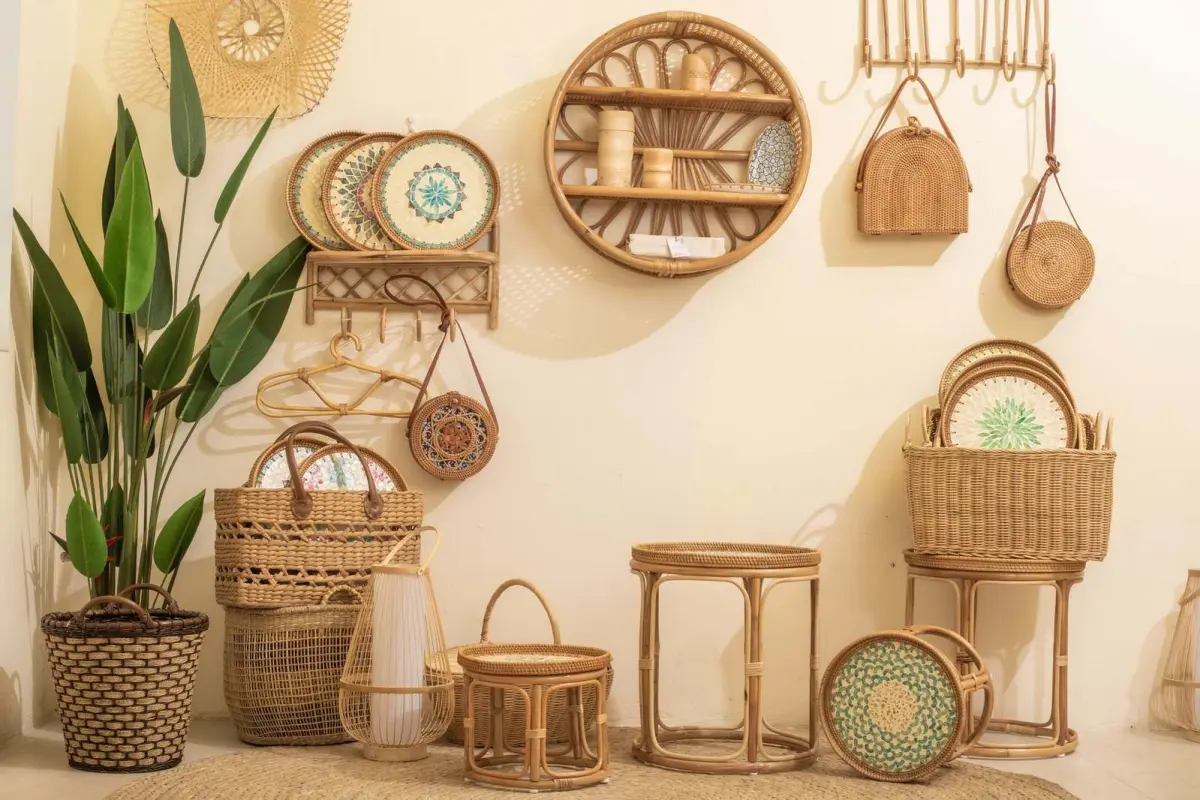
A designer quoted by Real Homes says the look is all about sustainable décors made from wicker, rattan, wood and hemp. Another Real Homes guide says to balance plenty of textiles with accents of natural materials like wood and jute.
- Rattan and cane: woven furniture and cane detailing.
- Jute: durable rugs that ground the seating area.
- Raw timber: shelves, tables and small accents.
- Macramé and baskets: handmade texture for blank walls and storage.
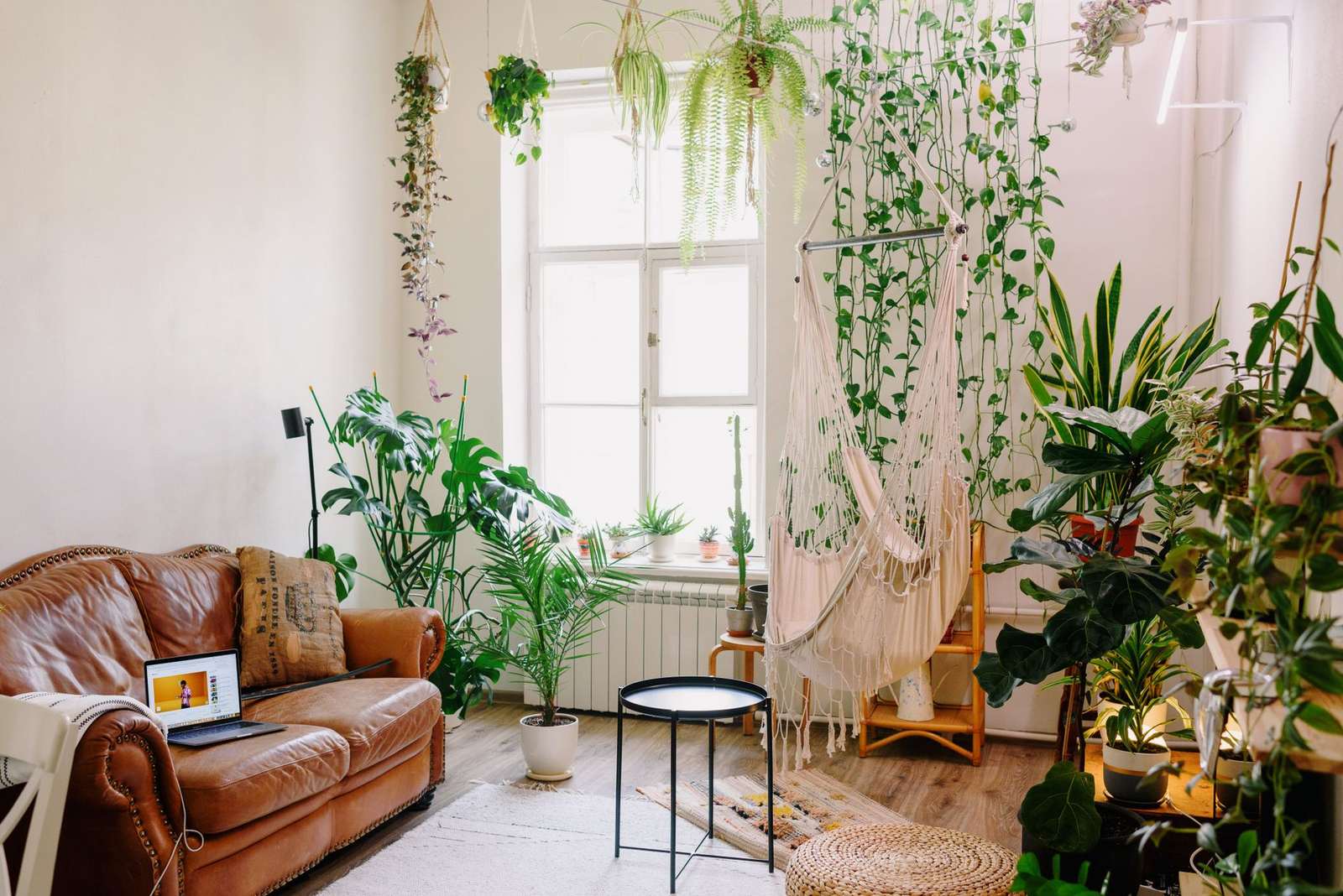
The rattan, cane, timber and jute pairing comes from My Bespoke Room, whose designers also recommend light, breathable textiles such as linen, macramé hangings and chunky knit throws. Those add warmth without visual clutter.
Natural wood also appears in other styles. If you want a plainer take on it, compare this look with farmhouse decor ideas.
Layer pattern last, and keep it connected
Pattern is where boho gets its personality. A designer quoted by Real Homes says pillows, blankets and rugs are the most common way to add loud patterns, and they should be the last items you buy.
The patterns can all differ, but the same designer says to tie them together through one or two main colors. That one link keeps a mixed room from looking random.
- Settle the sofa, walls and floors in warm neutrals.
- Add rattan, jute, wood and woven pieces for texture.
- Pick one or two main colors to repeat.
- Buy pillows, throws and rugs last, and swap them with the seasons.
The style leans on a “more is more” philosophy, according to Real Homes. For playfulness, another Real Homes guide suggests fringing, tassels and pom pom trims on soft accessories.
My Bespoke Room’s designers describe a 70/30 rule that helps keep a room unified without looking too matchy-matchy, and they cover it under the idea of keeping everything in proportion. Read their full guide for how they apply it.
Spacejoy’s FAQ puts the balance point simply: layer textures but stick to a cohesive color palette to avoid visual clutter. Its guide adds that boho is about freedom, not perfection.
Bring in plants, baskets and handmade pieces
Plants do double duty by adding green and texture. Real Homes suggests choosing tropical green plants and displaying them in terracotta pots or macramé hangers.
Spacejoy lists handmade and vintage finds as part of the look, including pottery, vintage mirrors and global textiles. Woven baskets double as storage and add an organic feel.
Open shelves are a natural home for ceramics and baskets. If you want help arranging them, read how to style a bookshelf.
How do you make boho work in a small room?
You do not need a lot of floor space. A Hunker example uses a rattan divider to define a tiny studio, with plants, a gallery wall and a shaggy rug adding character without clutter.
- Use vertical space with hanging plants, compact furniture and mirrors, as Spacejoy suggests.
- Drape a handwoven blanket over the sofa arm, add mismatched pillows and a plant or two, a starting idea from Hunker.
- Keep the base neutral so the room feels calm even with texture on every surface.
Frequently asked questions
What is the easiest way to start with boho decor?
Show answer
Spacejoy suggests starting small with a patterned rug, woven baskets and a few plants, then slowly layering textures and accessories. You can read its advice on the Spacejoy guide.
What colors work best?
Show answer
The same Spacejoy guide names earthy tones such as terracotta, beige and olive green, with jewel tones like teal or mustard for boldness. Many designers still begin with warm neutrals as the base.
How do I keep boho from looking messy?
Show answer
Spacejoy says balance is key: layer textures but stick to a cohesive color palette. Repeating one or two main colors across your patterns also helps, per Real Homes.
Do I have to replace my existing furniture?
Show answer
Not necessarily. A designer quoted by Hunker says you can add boho to different styles, and that it is easy to add or remove decorative elements if you tire of them.