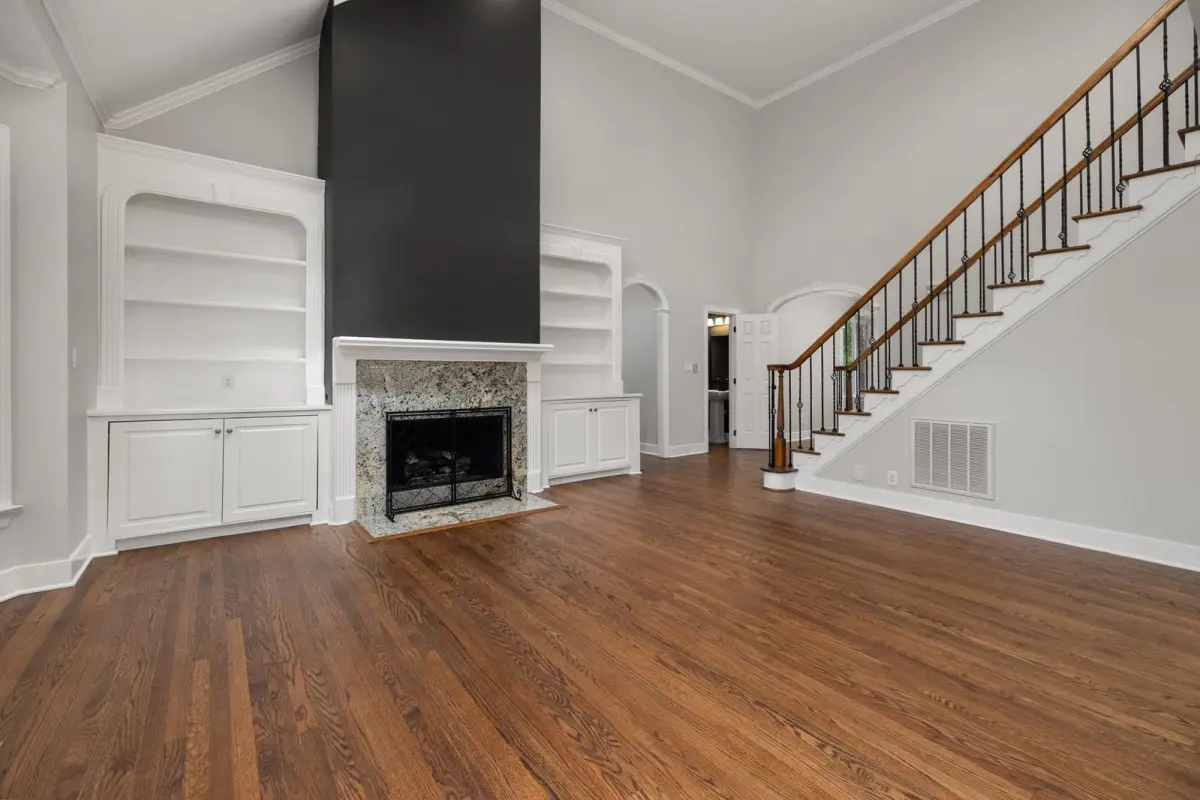
Wondering how to update a fireplace that feels stuck in another decade? You can usually do it with paint: clean the surface well, prime if needed, and choose a paint rated for the heat your fireplace makes.
You can find more upgrades in our collection of home improvement projects.
| Item | Value |
|---|---|
| Heat resistance of interior latex paint | Around 180 to 200 degrees Fahrenheit |
| Tintable Muuri fireplace paint, maximum dry heat | Up to +180 °C |
| Un-tinted Muuri fireplace paint, maximum dry heat | 300 °C |
| Wait after the primer coat before the finishing coat (Muuri) | At least 12 hours |
| Drying time for brick after cleaning | Overnight |
These figures come from Bob Vila’s guide to paint for brick fireplaces and Tikkurila’s fireplace painting FAQ. Figures can change, so check the source before you rely on them.
Decide what kind of update your fireplace needs
For a tired brick or stone fireplace, paint is the quickest route. Bob Vila’s guide calls a full remodel of the fireplace area time-consuming, messy and potentially expensive, and says painting over the existing brickwork is quicker, easier and less costly.
Paint also deals with grime. Paint maker Haymes says in its September 2024 guide that fireplaces are often subject to wear and tear from heat, smoke and soot.
Homebuilding says painting a brick fireplace is a job you can do yourself. A contemporary colour can be just as transformative as painting a wall.
Which method fits depends on what you have:
- Brick surround: clean, seal or prime, then paint.
- Marble or stone surround: clean, sand, prime, paint and add a topcoat.
- Inside the firebox: only a paint made for fireplace heat.
If the wall around the chimney breast looks flat once the fireplace is fresh, a diy board and batten treatment is one way to give it more character.
Which paint is safe for a fireplace?
Separate two zones first. The outside of a brick surround stays cooler than the firebox, and Bob Vila’s guide says interior latex paint has a heat resistance of around 180 to 200 degrees Fahrenheit, which is perfectly adequate for the brickwork. It adds that painting the firebox itself requires a specialty high-temperature paint.
Do not reuse leftover wall paint inside the fireplace. House Digest’s March 2025 article says interior paints such as latex do not do well against heat, and oil-based paints can be flammable.
The same article says some heat-resistant paints handle only around 430°F, while some wood-burning fireplaces can reach 600°F to 1,200°F. It says stove and fireplace paint can withstand 1,200°F, so read the rating on the tin before you buy.
Common options, and where each one fits:
- Masonry paint: Homebuilding says you can apply it directly to brick without a primer, though you might need at least three coats to cover properly.
- Chalk paint: Hunker notes it is not flammable, but chalk paints can still chip, crack and peel when exposed to high temperatures.
- Interior acrylic or latex: suited to a surround, not the firebox, and usually needs a primer or a second coat on porous brick.
- High-heat fireplace paint: the choice for any surface that takes real heat.
As a neutral example, Tikkurila states that tintable Muuri can withstand temperatures up to +180 °C, and 300 °C if it is un-tinted. Bob Vila’s guide also advises you to avoid cheap fireplace paints of unknown origin.
How to prepare the surface before you paint
Preparation decides how long the finish lasts. Homebuilding’s tool list is short: a wire brush, a bucket, dust sheets, rubber gloves, a paintbrush, a roller and paint.
- Lay dust sheets over the floor and hearth, because soot makes a mess.
- Brush the brick down with a stiff brush or broom to remove soot, loose debris, dirt and cobwebs.
- Scrub with a stiff or wire brush and warm soapy water. Sugar soap or a specialist brick cleaner can tackle stubborn stains and grease.
- For visible soot, Bob Vila’s guide suggests half a cup of trisodium phosphate (TSP) diluted in a gallon of water. Wear rubber gloves.
- Let the brick dry completely, ideally overnight, before you prime or paint.
Timing matters too. Bob Vila’s guide says this is normally a job for warmer months when fires aren’t being lit. For the Muuri product, Tikkurila asks for a clean, dry surface, air and surface temperature of at least +10 °C and relative humidity below 80 %.
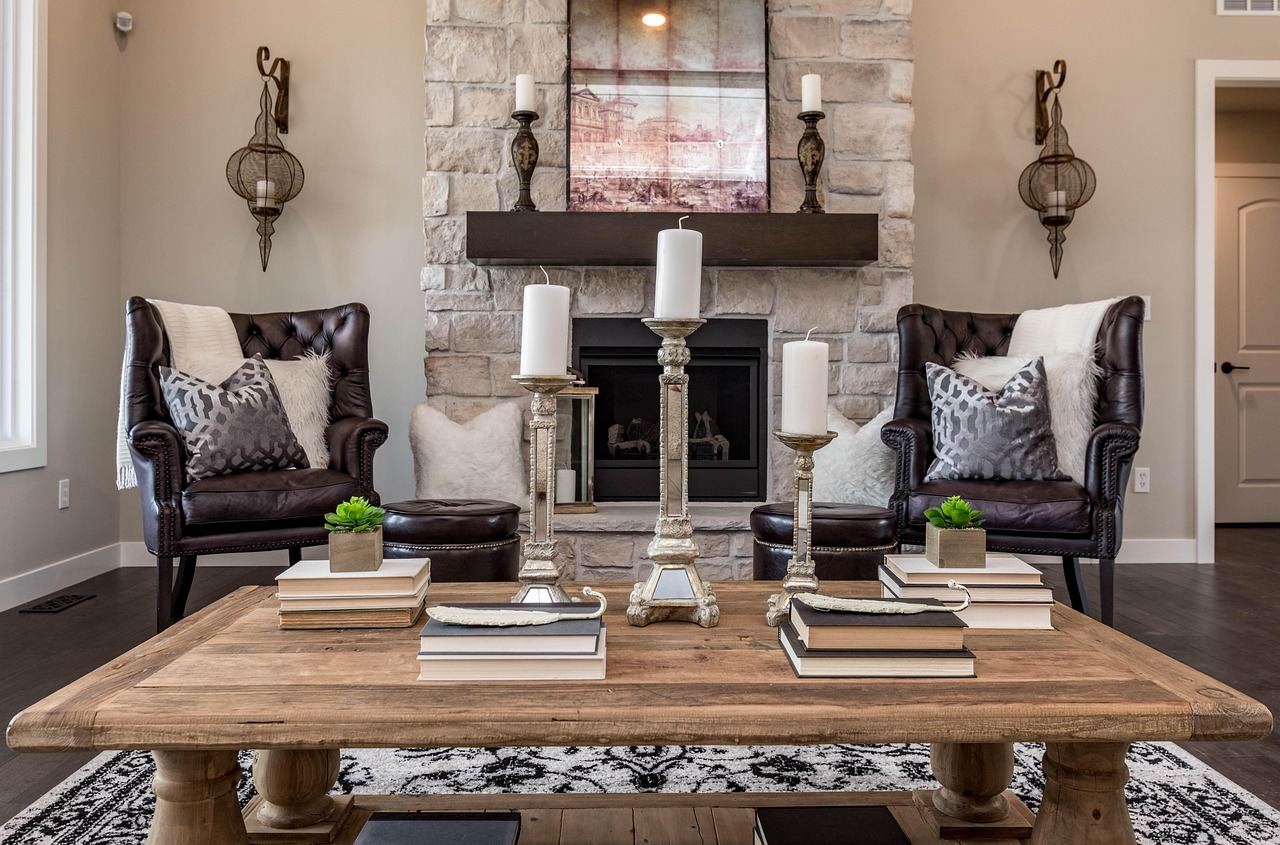
Painting a brick fireplace step by step
Brick is thirsty. Homebuilding says bricks are more absorbent than standard plastered walls and will suck up more paint, especially old bricks, so bare brick needs sealing before any paint goes on.
A primer that acts as a sealer and stain blocker gives the best finish, per the same guide. Bob Vila adds that even acrylics that include a primer seldom provide sufficient coverage in a single coat, so either prime first or plan a second coat.
- Prime bare brick with a sealer and stain-blocking primer, unless your masonry paint is meant to go straight on.
- Follow the maker’s drying time. For Tikkurila’s Muuri, one priming coat is followed by a finishing coat after the primer has set for at least 12 hours.
- Apply your colour with a brush for the mortar joints and a roller for the faces.
- Add further coats until the brick is covered, following the recoating times on the tin.
Pick your finish with the surface in mind. Bob Vila says flat, matte or eggshell are the most common sheens on brick, because high-gloss finishes are difficult to achieve on textured brickwork. If you like a see-through look with some of the original brick showing, a primer is unnecessary.
The prep, prime and paint logic carries over to other surfaces, and you can see it applied to a different project in how to paint kitchen cabinets.
Updating a marble or stone surround
Smooth stone needs extra grip. Hunker’s guide says marble is very smooth, so going over it with 100-grit sandpaper helps paint adhere. Use a natural stone cleaner for dirty jobs, since other cleaners can damage marble.
Hunker’s method runs like this:
- Clean, sand to remove the shine, wipe away dust and tape off walls, mantel and floor.
- Prime with a standard primer for chalk paint, or a high-heat primer if you use high-heat paint.
- Paint the top, then the sides, then the hearth. The guide says to let the first coat dry for an hour before the second.
- Seal chalk paint with a topcoat, because it chips easily. The guide recommends three coats of topcoat for the best protection.
Skip the topcoat on high-heat paint, because Hunker says there are no high-heat topcoats that work on fireplaces. Allow a topcoat to fully cure for three days before using the fireplace.
Hunker also says stone surrounds do not typically get very hot. If yours does, choose a heat-rated paint instead of chalk paint.
Frequently asked questions
Can I use leftover wall paint on my fireplace?
Show answer
Not inside the firebox, where the heat is far higher than on the surround. Use a paint made for fireplace heat there. On a cooler brick surround, interior latex is adequate according to Bob Vila’s guide.
Do I need to prime brick before painting?
Show answer
Usually, yes. Homebuilding says bare brick must be sealed before any paint, though a masonry paint can go straight on. A translucent, see-through look also needs no primer.
When is the best time to paint a fireplace?
Show answer
Choose warmer months when fires aren’t being lit, as Bob Vila’s guide suggests. Let cleaned brick dry, ideally overnight, before you start.
How long should I wait before lighting a fire?
Show answer
Follow the paint maker’s instructions. For a chalk-painted marble surround with a topcoat, Hunker says to allow three days to cure.