Worried your new wallpaper will bubble, go crooked or peel? Here’s how to install peel and stick wallpaper smoothly: prep a clean, dry, smooth wall, mark a true vertical line, then peel and smooth each strip from the top down.
If you enjoy this kind of makeover, browse more home improvement projects for your home.
| Item | Value |
|---|---|
| Wait after painting the wall | 4 weeks minimum |
| Let rolls rest in the room | 24 hours |
| Backing peeled back at a time | About 12-24 inches |
| Extra length at top and bottom of a strip | An extra inch or two |
| Defect check while hanging | After 2-3 lengths |
These figures come from the installation guides by WallPops and Lemieux et Cie. Brands differ and guides can change, so check the source and the instructions that came with your roll before you rely on them.
Is your wall a good match for peel and stick?
Most makers agree on one thing: the product wants a smooth, clean, painted surface. WallPops does not recommend these surfaces:
- Textured walls
- Existing wallpaper
- Brick or cinderblock
- Unpainted drywall, sheetrock or plaster
- Outdoor walls
- Walls with non-stick paint
Tempaper adds matte, flat and low sheen paints to its not-recommended list. Lemon Park says eggshell, semigloss or gloss enamels work best.
Textured walls are a poor match, so if you want depth on a wall, a diy shiplap wall is a different route to consider. Makers do not fully agree here: Lemon Park says smooth or slightly textured surfaces grip best, while James and Colors suggests high-tack wallpaper for textured walls. Until you have read the label on your roll, treat texture as a risk.
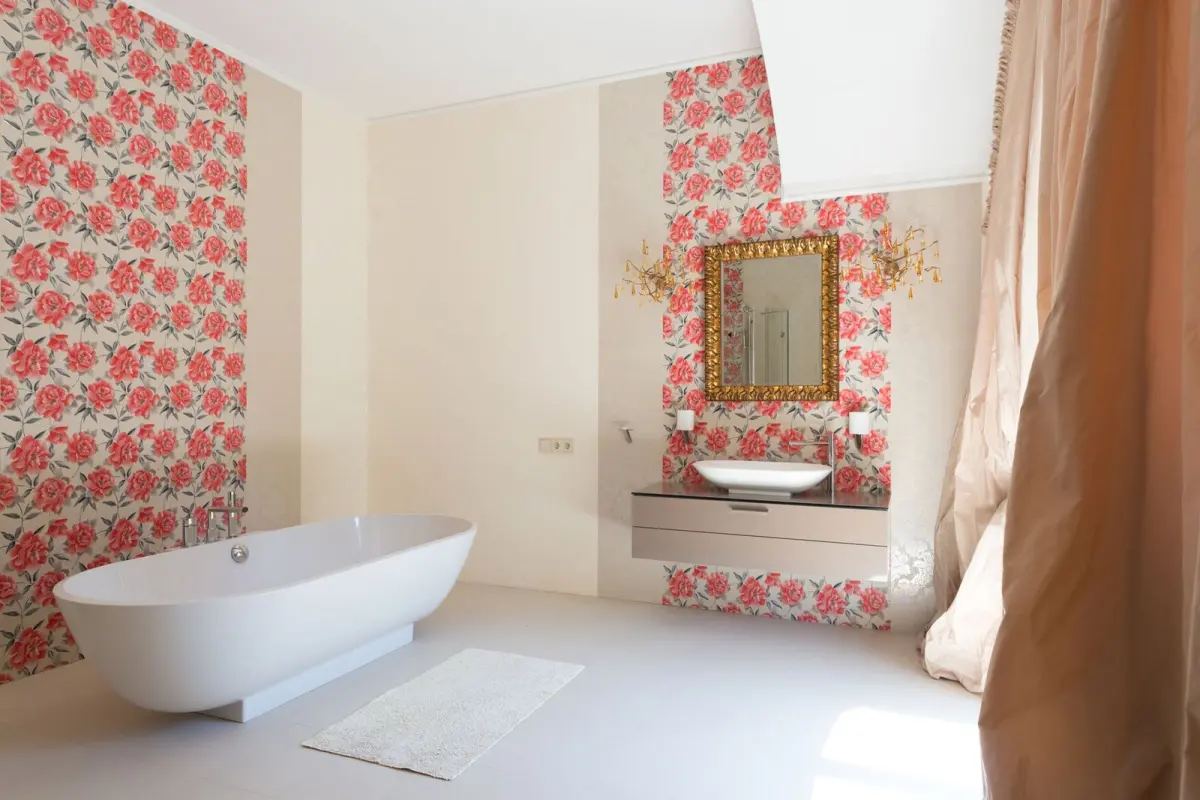
Bathrooms and steamy kitchens need extra thought. Lemon Park notes that peel and stick is suitable for many areas, but high-humidity spaces are not ideal, as stated on its installation page.
Prep the wall, the room and the rolls
Preparation decides whether the paper stays flat. Start with the paint: WallPops asks for a minimum of 4 weeks of curing on newly painted surfaces, and James and Colors says at least 30 days. If you are painting first, the guide on how to paint kitchen cabinets covers another project where prep matters as much as the finish.
Next, clean the wall. Two makers describe slightly different routes:
- Lemon Park: wash with mild dish soap and warm water, then wipe with 70% rubbing alcohol to remove oils.
- Tempaper: wipe with a 1:1 isopropyl alcohol and water solution and let it dry.
Switches and sockets need care. Turn off the power before removing covers, as Tempaper advises, and WallPops adds that dust left behind will hurt adhesion.
Finally, let the rolls acclimate. Lemieux et Cie suggests resting them in the room for 24 hours so they lie flat. While you wait, inspect every roll and confirm they share the same run or lot number for exact colour matching, as WallPops recommends.
Tools to gather
WallPops lists a short supplies list:
- Tape measure
- Level
- Steel ruler or straight edge
- Razor knife or scissors
- Pencil
- Plastic smoother
Add a step stool for high walls. A fresh blade matters too, because Lemon Park calls a sharp razor knife your best friend and says to change the blade often, as noted on its installation page.
Measure, cut and mark a true starting line
Measure the wall from ceiling to baseboard and cut your first strip longer than that. The allowance varies by maker: WallPops says an extra inch or two at the top and bottom, Tempaper says 2-3 inches at the bottom, and Lemieux et Cie says a 3-4-inch allowance at both ends. Follow the guide that came with your roll.
Match the pattern before you cut. Line the next panel up with the last one, and consider numbering the back of each panel as you work, a tip from Tempaper.
Now mark your plumb line, the vertical guide for the first strip. Do not trust corners: James and Colors warns never to assume they are perfectly straight, and walls meeting ceilings and baseboards are not a good reference point either. Tempaper measures out from the corner the width of the roll minus half an inch, so for a 27 inch roll you would mark 26.5 inches from the corner, then draw a level line there, as shown on its guide.
Hang the first strip, then the rest
Work top to bottom and keep the backing on as long as you can. These steps blend the common advice from the guides:
- Peel back the top of the backing. Lemieux et Cie says about 12-24 inches, while Tempaper peels back 3-4 ft.
- Align the strip edge with your plumb line, letting a bit of excess overlap the ceiling to be trimmed later.
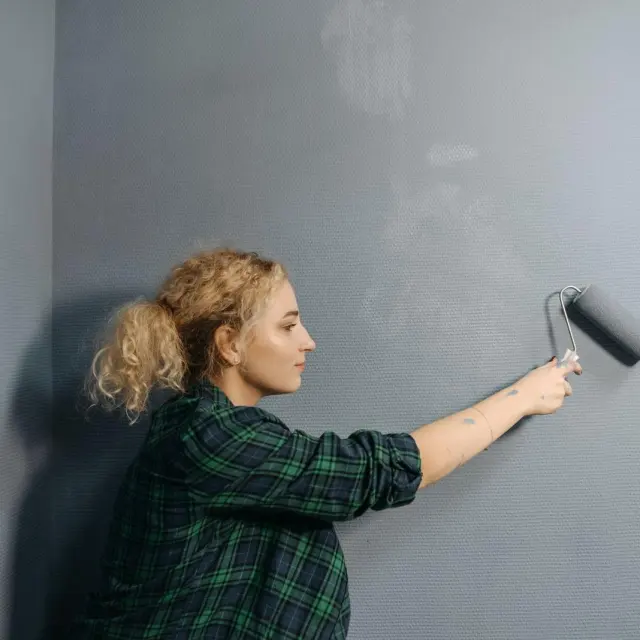
- Smooth from the centre out with a squeegee or plastic smoother, working in sections down the wall.
- Peel more backing as you go, pressing the paper on gradually until you reach the baseboard.
- Trim at the ceiling and baseboard with a straight edge and a sharp razor knife.
- Hang the next strip, matching the pattern before it touches the wall.
Smoothing from the centre out comes from Tempaper, and the ceiling overlap from WallPops. A helper makes long strips far easier: Lemieux et Cie suggests one person holds the roll while the other smooths.
Stop and check your work early. WallPops says to check again after hanging 2-3 lengths before continuing, so a defect does not spread across the whole wall.
Fix bubbles, seams and mistakes
Small errors are normal and fixable. For a trapped bubble, Tempaper says you can make a tiny hole in the centre of the bubble with a safety pin to release the air. Do not pull on the paper as you hang it, because the paper may stretch and then not align properly.
Seams are where makers disagree most, so read your own instructions first:
- Lemon Park: butt the seams tightly together without overlapping.
- James and Colors: panels have a slight built-in overlap to allow for vinyl stretching due to humidity.
- Lemieux et Cie: sometimes a slight overlap of 1/16 inch if the pattern requires it.
- Tempaper: use a slight overlap where temperatures fluctuate, to avoid splitting seams.
If a strip goes on crooked, peel it back gently and reposition it before smoothing it down again, as James and Colors advises. When it is time to remove the paper, Tempaper says to start at a corner and peel slowly, parallel to the surface, as described in its removal notes.
Frequently asked questions
How long should I wait after painting a wall?
Show answer
WallPops asks for a minimum of 4 weeks, and Lemon Park says at least 4 weeks or whatever the paint can specifies. James and Colors says at least 30 days. Follow the longest time listed on your paint and wallpaper instructions.
Do I overlap the strips?
Show answer
It depends on the maker. Some say butt the seams together without overlapping, while others build in a slight overlap or recommend one in changing temperatures. Check the guide that came with your roll.
Can I use peel and stick in a bathroom?
Show answer
Lemon Park says peel and stick suits many areas but high-humidity spaces are not ideal. If you try it, test a small area first and read your product’s own guidance.
How do I get rid of an air bubble?
Show answer
Smooth it toward the edge with your smoothing tool. If it stays, Tempaper suggests a tiny safety pin hole in the centre of the bubble to let the air out.
Do I need extra adhesive?
Show answer
Tempaper says its peel and stick paper has a self-adhesive backing and needs no additional adhesive. Check your own product’s guide.