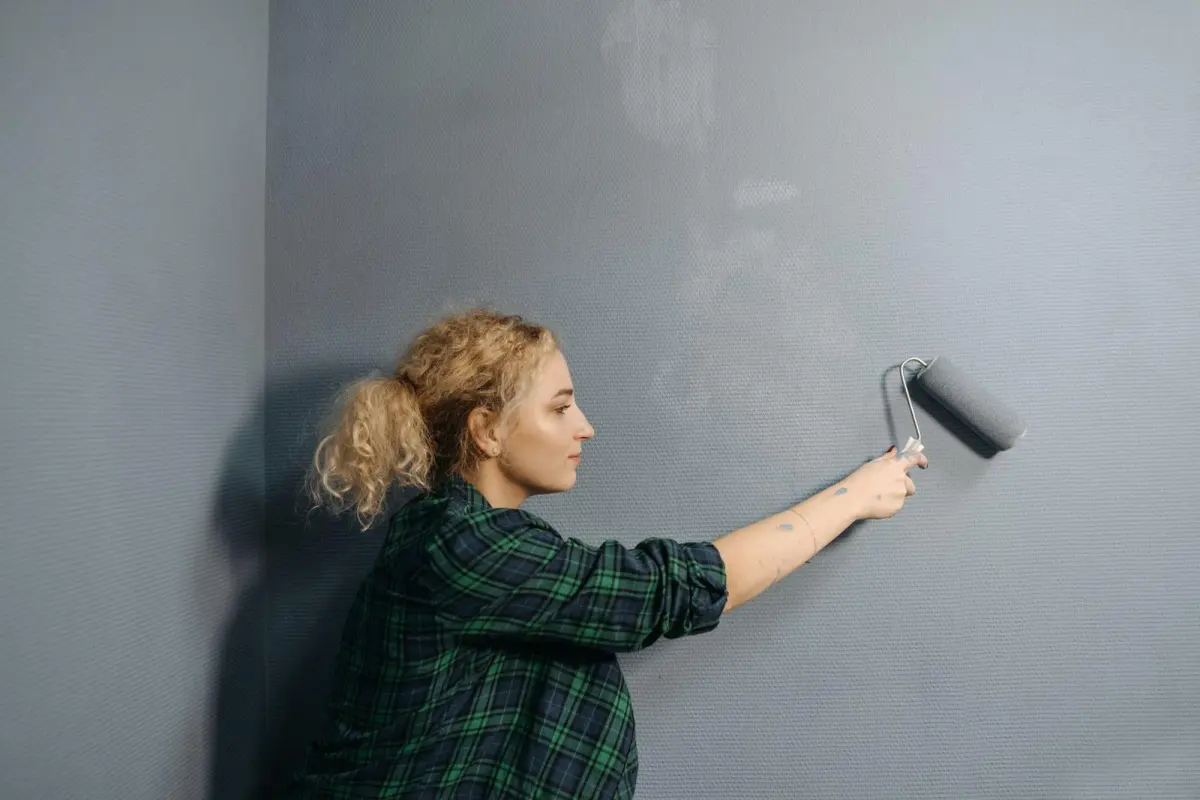
Worried about streaky walls or drips on the floor? Here is how to paint a room: prep well, paint the ceiling first, then walls, and trim last. Most of the work happens before the first brush stroke.
This guide sits within the wider set of home improvement projects on this site, written for first-timers.
| Item | Value |
|---|---|
| Difficulty and time for one room | Beginner, 2-4 hours |
| Share of the job that is preparation | Probably 85% |
| Sandpaper for walls (pole sander) | 120-grit |
| Sandpaper for moldings, doors and windows | 220-grit |
| Ceiling roller work area | 3 to 5 square feet per section |
| Age of paint that should be tested for lead | More than 45 years old |
These figures come from Home Depot’s Eco Actions guide (dated April 2021) and This Old House (updated May 2026). Figures can change, so check the source before you rely on them.
Prep the room before you open the paint
Painter Mauro Henrique, quoted by This Old House, says preparation is probably 85% of any painting project. Rushing this stage is the most common reason a beginner’s walls look patchy. A good target, according to Fine Homebuilding, is a surface that is clean, dry, dull, and sound.
Work through the room in this order:
- Remove hardware such as outlet covers, doorknobs and light fixtures. Tape the screws to each piece and label its location so reinstalling is easy.
- Move furniture out if you can. If something has to stay, cover it with plastic sheeting and keep a pathway at least 3 feet wide.
- Inspect walls and trim for cracks, holes and dents, then fill them with spackle or caulk and let the filler dry completely.
- Sand the repairs flush. A small piece of 220-grit sandpaper or a sanding sponge works on patches, and a pole sander with 120-grit paper smooths whole walls.
- Remove the dust with a vacuum that has a HEPA filter, then wipe with a damp rag or tack cloth.
Professional painter Jim Clark, also quoted by This Old House, notes that moving everything out might take 15 to 30 minutes more than sliding it to the center of the room. He says it makes prep and painting a whole lot easier. That small trade is usually worth it.
When you caulk gaps around trim, go easy. Cutting the tip of the tube too big leaves messy joints, so start with a small opening and enlarge it only if needed.
Do you need primer first?
Not always. Primer is essential on new drywall and fresh plaster, according to This Old House, because it seals the surface. It also helps when you are covering a dark color with a light one, or when the old paint is damaged.
For ordinary walls, This Old House suggests a general purpose, water-based, 100% latex formula. If you are making a big color change, ask the paint store to tint the primer so coverage stays even.
If you are only recoating walls in good condition with a similar color, you may be able to skip it. When in doubt, check the label on your paint and primer, because surfaces like bare wood, metal and MDF each call for a different type.
Protect floors and mask the edges
Drop cloths come in three common types, and Home Depot’s guide describes the trade-offs:
- Canvas is durable and absorbent, so it can be reused.
- Plastic is durable and less expensive, but it is not absorbent, so spills are more likely to be tracked if stepped on.
- Paper is the most economical but tears easily on floors, which makes it better for covering fixtures, cabinets and furniture.
Painter’s tape is for masking moldings, windows and doors. Home Depot’s guide says to press the tape down flat and even to prevent bleed-through. Choose an adhesion level that suits the surface, since a freshly painted wall needs a gentler tape than a textured one.
Paint in order: ceiling, walls, then trim
Fine Homebuilding’s rule is to work from the top down: ceiling first, walls next, and trim last. Drips and spatter then land on surfaces you have not painted yet, and you fix them as you go.
Before rolling any section, use a brush to cut in. That means painting the edges where the ceiling meets the wall, which covers areas the roller might miss.
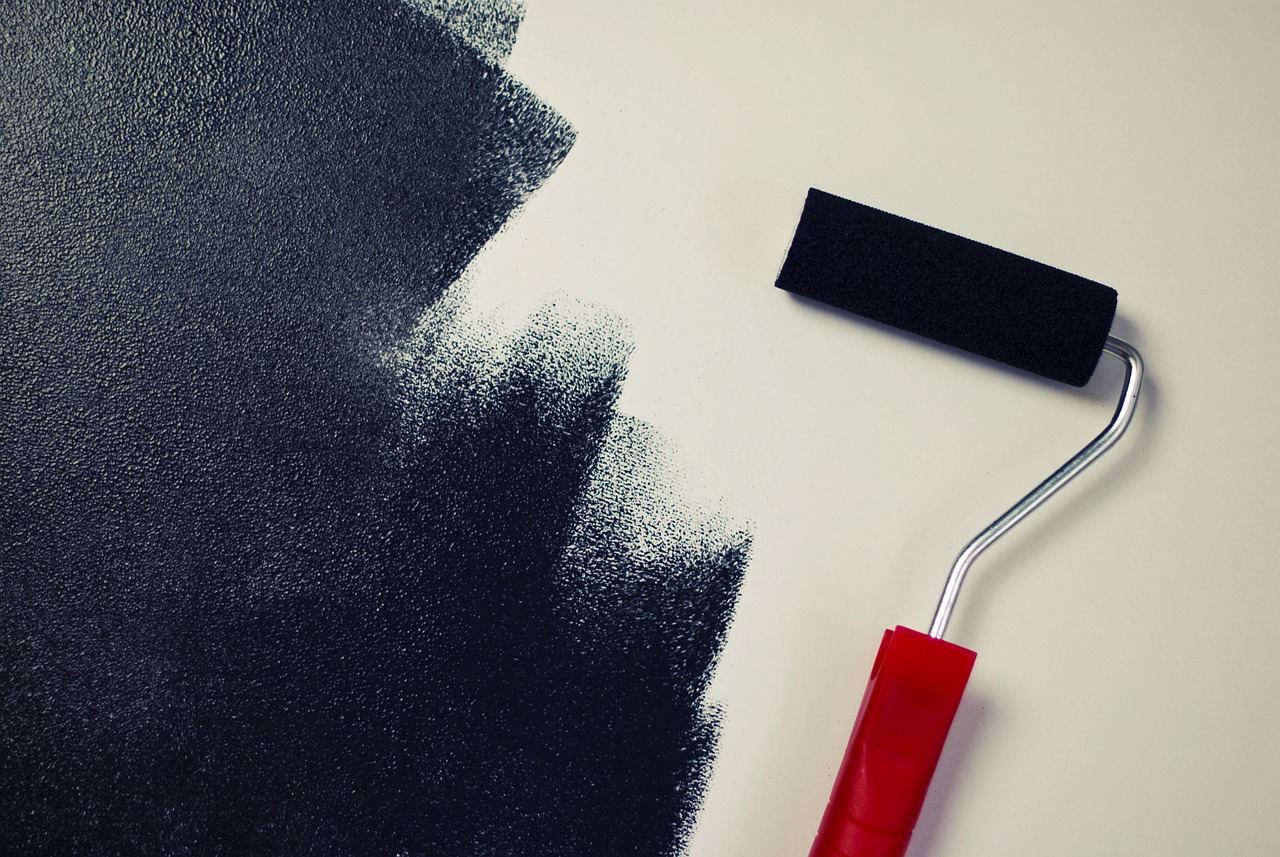
For the ceiling itself, Home Depot’s guide suggests these habits:
- Work in grid-like sections of 3 square feet to 5 square feet each, which lets you see your progress.
- Use a low nap roller on a smooth ceiling.
- Use a roller with 1/2-inch or 3/4-inch nap on a textured ceiling.
Repeat the same rhythm on the walls: cut in the edges first, then roll the open area while the cut line is still wet. Finish with the trim once everything else has dried.
A sprayer is another option for large surfaces. Home Depot’s guide says a paint sprayer can apply paint more quickly and evenly than brushes or rollers. Fine Homebuilding adds that interior spraying takes a lot of preparation and setup, so it suits bigger jobs more than a single bedroom.
Once the room is done, you may want a feature wall next. The diy shiplap wall project is a natural follow-up, and the budget bathroom makeover guide is useful if the bathroom is next on your list.
Stay safe around old paint and fumes
Older homes call for lead caution. A Home Depot guide dated April 2021 points to the EPA’s renovation, repair and painting program for any house or surface built before 1978. This Old House, updated May 2026, says to test for lead first if the paint could be more than 45 years old.
Do not sand suspect paint until you know what you are dealing with. Testing first protects you and anyone else in the home.
Fumes matter too. Keep the room well ventilated, and Home Depot’s guide says to wear a respirator mask if the paint fumes are strong. Oil-based and shellac primers give off volatile organic compounds (VOCs), which This Old House warns can damage your lungs.
Frequently asked questions
How long does it take to paint a room?
Show answer
Home Depot’s guide, dated April 2021, rates the project as beginner level and lists a duration of 2-4 hours. Your own time will depend on how much patching and sanding the walls need, plus drying time.
Should I paint the ceiling or the walls first?
Show answer
Paint the ceiling first. Both Home Depot and Fine Homebuilding recommend working from the top down, with walls next and trim last.
Do I need to sand before painting?
Show answer
Yes, light sanding helps. This Old House suggests 220-grit paper on moldings, doors and windows and a pole sander with 120-grit paper on walls, followed by removing all the dust.
Is a sprayer better than a roller for a beginner?
Show answer
Not necessarily. Fine Homebuilding says a spray finish is faster to apply, but interior spraying is time-intensive in terms of preparation and setup. For one room, a brush and roller are simpler.