Staring at a blank wall and a pile of frames? The best gallery wall ideas start with one anchor piece, one steady gap of 2-3 inches, and a center near 57 inches high.
Browse more home decor ideas for other rooms once this wall is done.
| Item | Value |
|---|---|
| Height of the grouping’s center | 57-60 inches from the floor |
| Gap between frames | 2-3 inches |
| Gap above furniture | 5-8 inches |
| Width compared with the furniture below | Roughly two-thirds |
| Anchor frame size | Roughly 2-3 times the smallest frame |
These figures come from Frameology’s gallery wall rules and its layout guide. Guidance like this can change, so check the source before you rely on the figures.
Pick a layout that suits your wall
Choose the layout from the shape of your wall and the pieces you already own, not from a photo of someone else’s room. Fine Art America’s layout guide says six layouts cover nearly every wall.
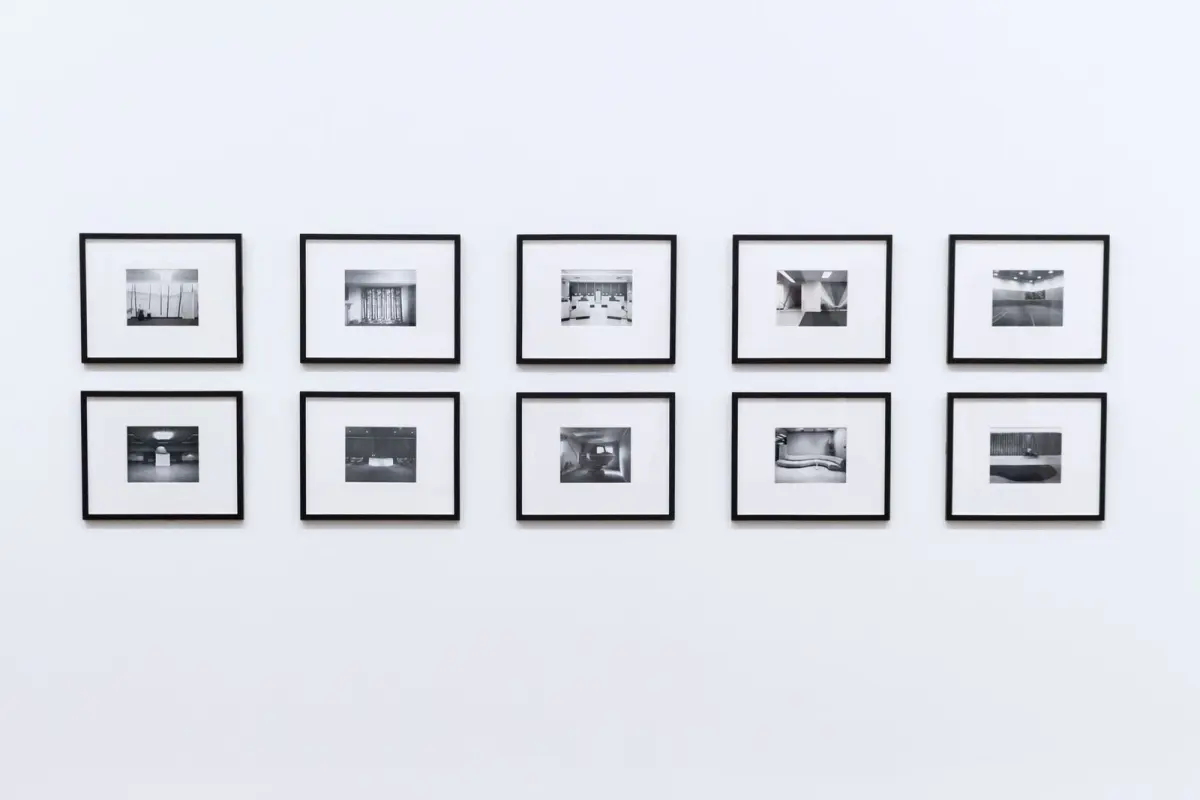
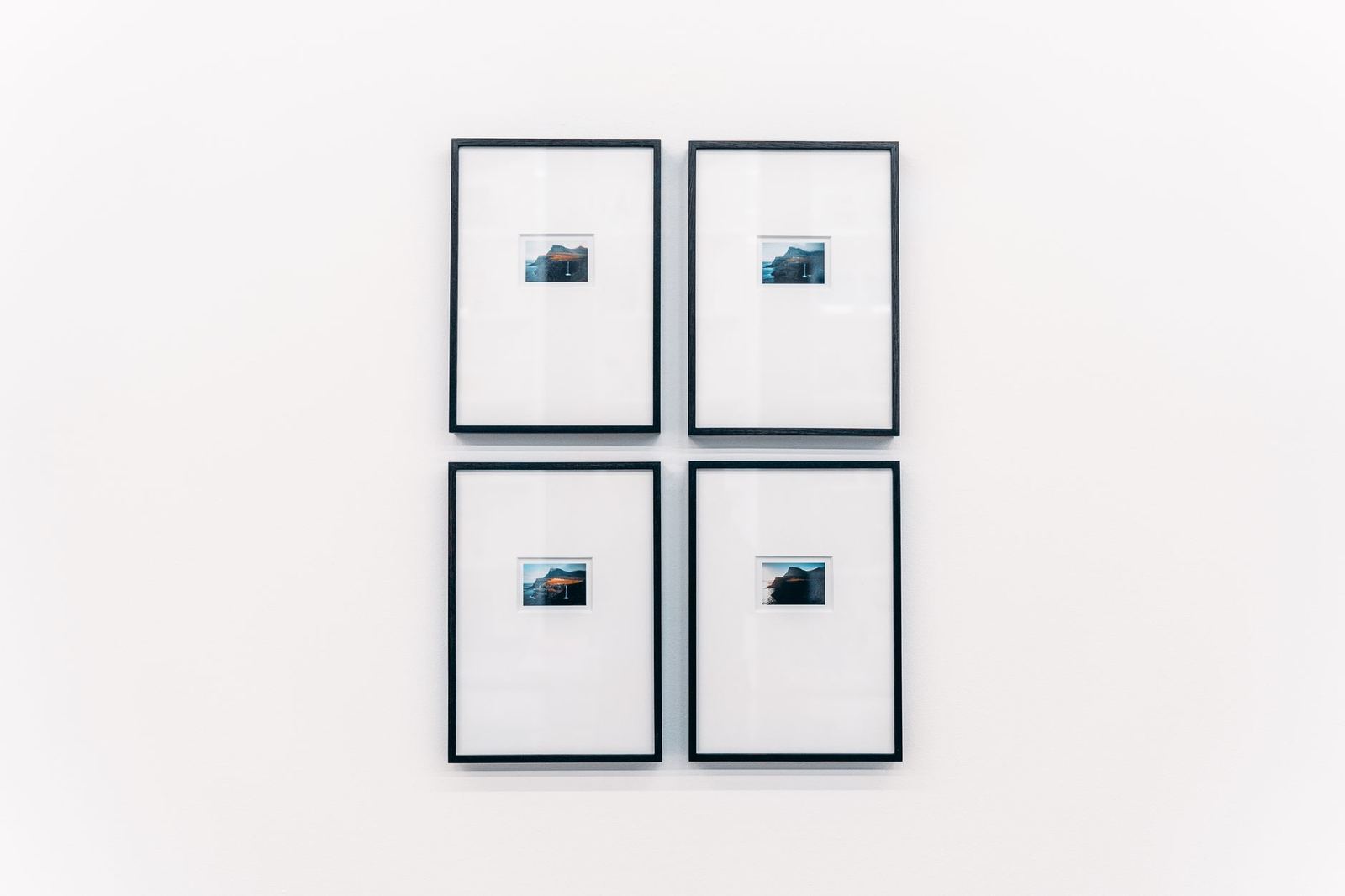
- Grid: frames line up in uniform rows and columns, which suits matching pieces.
- Salon: varied sizes and frames, loosely spaced. It looks expressive but needs more planning to feel cohesive.
- Linear: a single row, a good fit for hallways, long low walls and the space above a bench.
- Column: a vertical stack that adds height on narrow walls, between windows and beside doors.
- Ledge: a picture shelf for rentals and anywhere you will change your mind, with no second nail hole.
- Anchor with satellites: one large hero piece with smaller frames orbiting it.
If you are unsure, start with the grid. The same guide calls it close to impossible to make accidental when the frames, mats and gaps are identical.
Choose one unifying thread
A wall of mixed pieces reads as a collection when something repeats. Blick’s gallery wall guide notes that one unifying thread is usually all it takes, such as a shared palette, subject or frame finish.
Mat color is a strong choice. CustomPictureFrames.com calls mat board color the strongest visual unifier, even when the frames themselves do not match.
You do not need to match everything. According to Frameology, matching all three elements looks like a showroom, while matching none looks like a pile of frames.
Frames can also set the mood of the room. Black frames with white mats read graphic and modern, and natural wood warms a space up, as the Frameology layout guide puts it. If your room leans rustic, our farmhouse decor ideas page is a natural next stop for wood-toned frames.
Get gallery wall spacing and height right
Spacing is what makes a wall look planned. Frameology’s rules say to keep 2-3 inches between frames: below about 1.5 inches pieces blur into one block, and above 3 inches the group loses cohesion.
Pick one gap and use it everywhere. A cut piece of cardstock makes a handy spacer while you hang, and consistent spacing matters more than the exact number you choose, as Frameology’s hanging guide explains.
For height, treat the whole group as one shape. Hang the center of the grouping 57-60 inches from the floor, per the same rules page, rather than the center of each frame.
Above a sofa or console, Frameology’s rules say to leave 5-8 inches between the bottom of the arrangement and the furniture. The layout guide adds that designers often keep the arrangement to roughly two-thirds the width of the furniture below it.
Balance mixed sizes
Pick one anchor and size the rest around it. The anchor should be roughly 2-3 times the smallest frame, according to the gallery wall rules.
Then check visual weight. The hanging guide suggests dividing the wall into four imaginary quadrants and noting that dark frames read heavier than light ones. If one corner feels light, swap in a darker image or a slightly larger frame.
How do you plan it before you drill?
A paper mock-up costs nothing and saves patching later. Work through these steps in order.
- Measure the usable wall. Subtract furniture, door and window trim, light switches, thermostats and air vents, as the Frameology layout guide advises.
- Trace each frame onto kraft paper, cut out the shapes and mark the hanger positions, following Blick’s method.
- Tape the templates to the wall with painter’s tape and move them until the layout stops bothering you.
- Live with the templates for a day before patching or changing anything, as the hanging guide recommends.
- Hang the anchor first. Start in the middle and work outward, checking each frame with a level.
- Step back and view the wall from across the room instead of up close.
Choose your hardware before you order frames. Nails hold more weight and stay where you put them, but they leave holes, as the layout guide notes.
Fixes for tricky walls and renters
Real rooms rarely cooperate with a tidy rectangle. These adjustments come from the Frameology rules page unless noted.
- Stairs: measure 57 inches up from the tread directly below each frame, not from the floor at the base of the stairs.
- Radiators: keep the bottom of the arrangement at least 12 inches above the radiator.
- Off-center walls: center the arrangement on the furniture beneath it instead of the wall.
- Salon walls: keep the outer boundary clean, because salon walls fail most often when it is ragged.
- Renters: Blick says removable hanging strips can be a good alternative, as long as you follow the weight limits closely.
The most common slip is a group that is too small for the wall. Fine Art America calls it the easiest mistake to make and the hardest to see.
If the wall is in a compact sleeping space, read how to decorate a small bedroom before you settle on frame sizes, since how to decorate a small bedroom covers that room on its own.
Frequently asked questions
How far apart should frames be?
Show answer
Keep 2-3 inches between frames, according to Frameology’s rules. Use the same gap between every pair of neighbors.
How high should a gallery wall hang?
Show answer
Put the center of the whole grouping 57-60 inches from the floor, per Frameology. Above furniture, leave 5-8 inches between the art and the piece below.
What is the easiest layout for a beginner?
Show answer
A grid of identical frames, mats and gaps, says Fine Art America. It is the layout to choose if you are unsure.
Can renters make a gallery wall?
Show answer
Yes. Blick suggests removable hanging strips for rentals, within their weight limits. A picture ledge also avoids extra nail holes, according to Fine Art America.